

Economics is nowhere near as mysterious as most experts make it sound. It shows up in the alarm that wakes you, the coffee you buy, the rent you pay, and the trade‑offs you wrestle with every single day. If you can decide between a concert and a family reunion, you’re already doing economics—you just don’t call it that.
In this post, I want to strip economics down to what it really is, show how it quietly governs our lives, and explain why getting the basics wrong has helped create today’s cost‑of‑living mess. This is the foundation for The Novack Equilibrium Theory (NETs), which I’ll unpack in later posts.
What economics actually studies
Economics is a social science that examines how people, businesses, and governments choose to allocate limited resources. It sits at the intersection of politics, psychology, business, and law because every choice—what you buy, where you live, how you vote—is an economic decision.
Economists split the field into two big branches.
Macroeconomics looks at the whole system: GDP, inflation, unemployment, and growth. It can tell us the U.S. economy is likely to grow next year, but it cannot tell us what you personally will do with your paycheck.
Microeconomics zooms in on individuals and businesses and asks how they respond to prices, incentives, and constraints.
You can use millions of individual data points to explain macro trends—but you cannot safely take a macro average and use it to predict a single person’s life. That gap between the neat averages and the messy reality of individuals is where much bad policy and bad advice come from.
Four ingredients of every economy
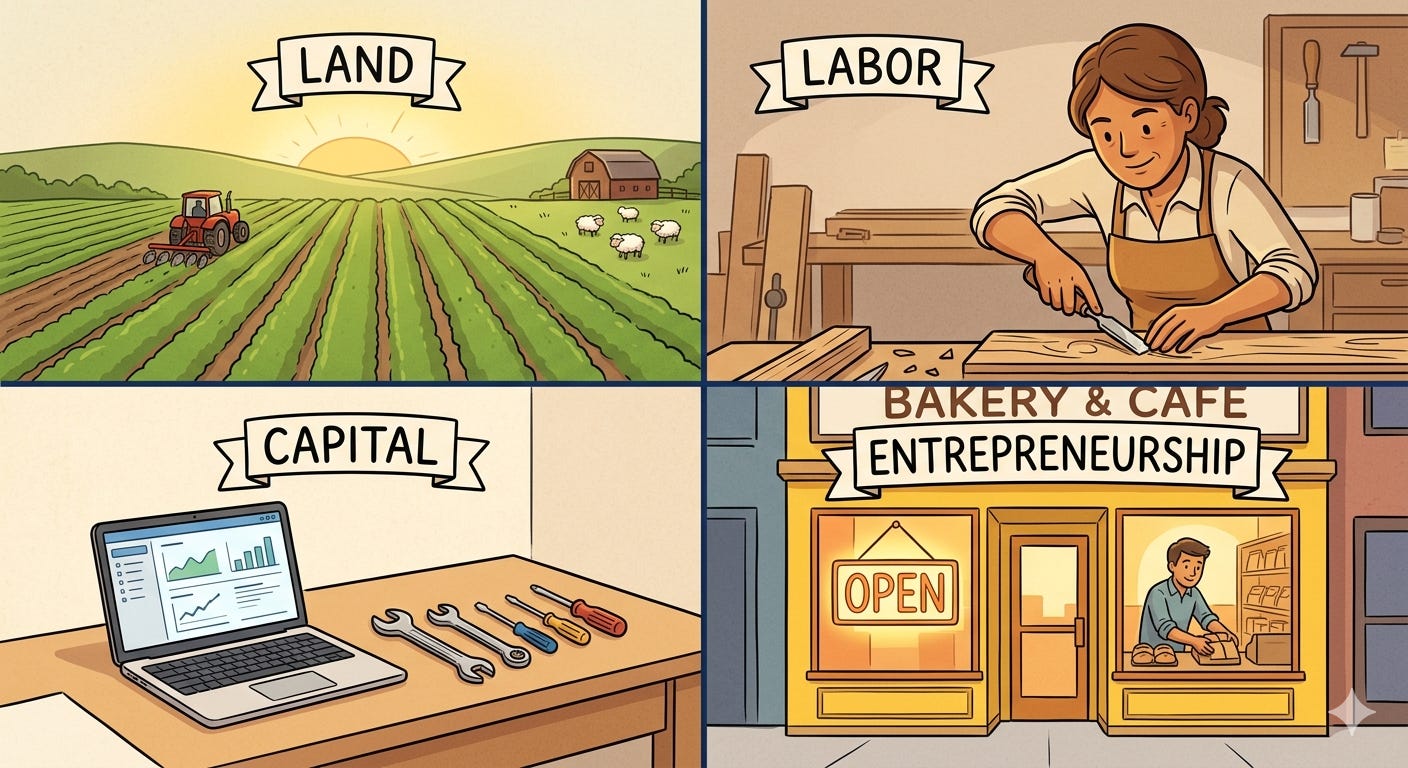
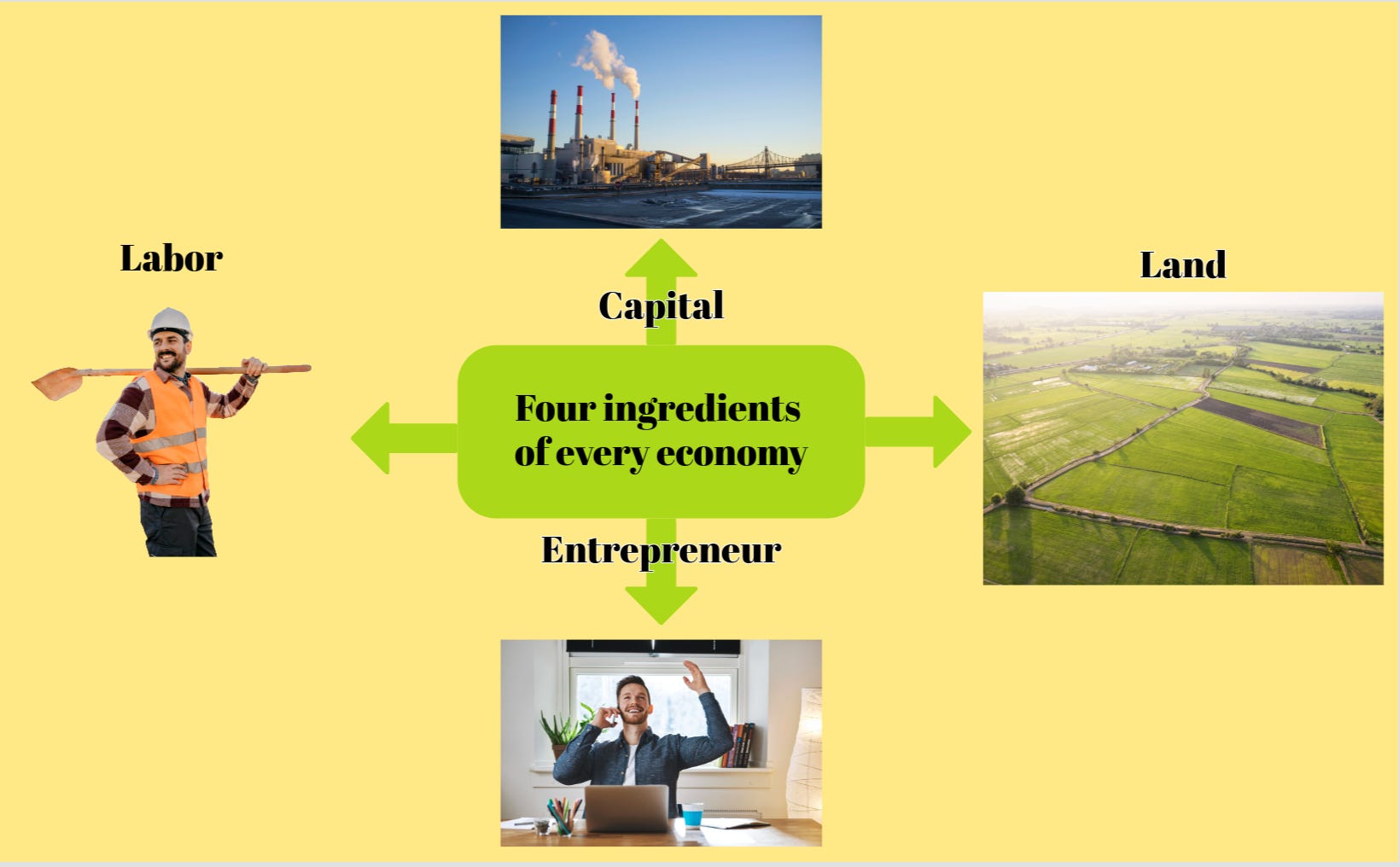
Underneath the jargon, every economy is just four things being combined in different ways:
Land: physical space and natural resources, from farmland to lithium deposits.
Labor: human time, skills, and knowledge.
Capital: machines, trucks, computers, tools—the stuff that lets labor do more.
Entrepreneurship: the people willing to assemble the other three, take risks, and try to meet a need.
Markets—whether a neighborhood shop or a global platform—send signals to entrepreneurs about how to use these ingredients. Prices, profits, and losses are feedback: “make more of this,” “make less of that,” “find a better way.”
This leads to a classic chicken‑and‑egg question: does demand come first, or does supply create demand? In reality, it’s both. Some clear need exists first (like cheaper energy or faster communication), but once entrepreneurs start experimenting, they often uncover new forms of demand people didn’t know how to ask for yet.
Scarcity, lithium mines, and the true cost of supply
Scarcity doesn’t always mean “we’re running out.” Often it means “we can’t affordably pull this off at scale yet.” Critical minerals like lithium aren’t rare in the earth; they’re expensive to find, permit, extract, and refine.
In the chapter, I walk through a lithium mine entrepreneur who adds up:
Land cost per kilogram of lithium
Labor cost per kilogram
Capital cost (equipment, plant) per kilogram
Those three together produce a break‑even price—say 300 dollars per kilogram—while the market might only be paying 250. The entrepreneur can choose to shut down or keep producing at a loss, stockpiling lithium and betting that future prices will rise. When prices eventually spike, he sells, reinvests in better equipment, cuts his cost base, and can stay profitable even after prices fall back.
This story illustrates two crucial truths:
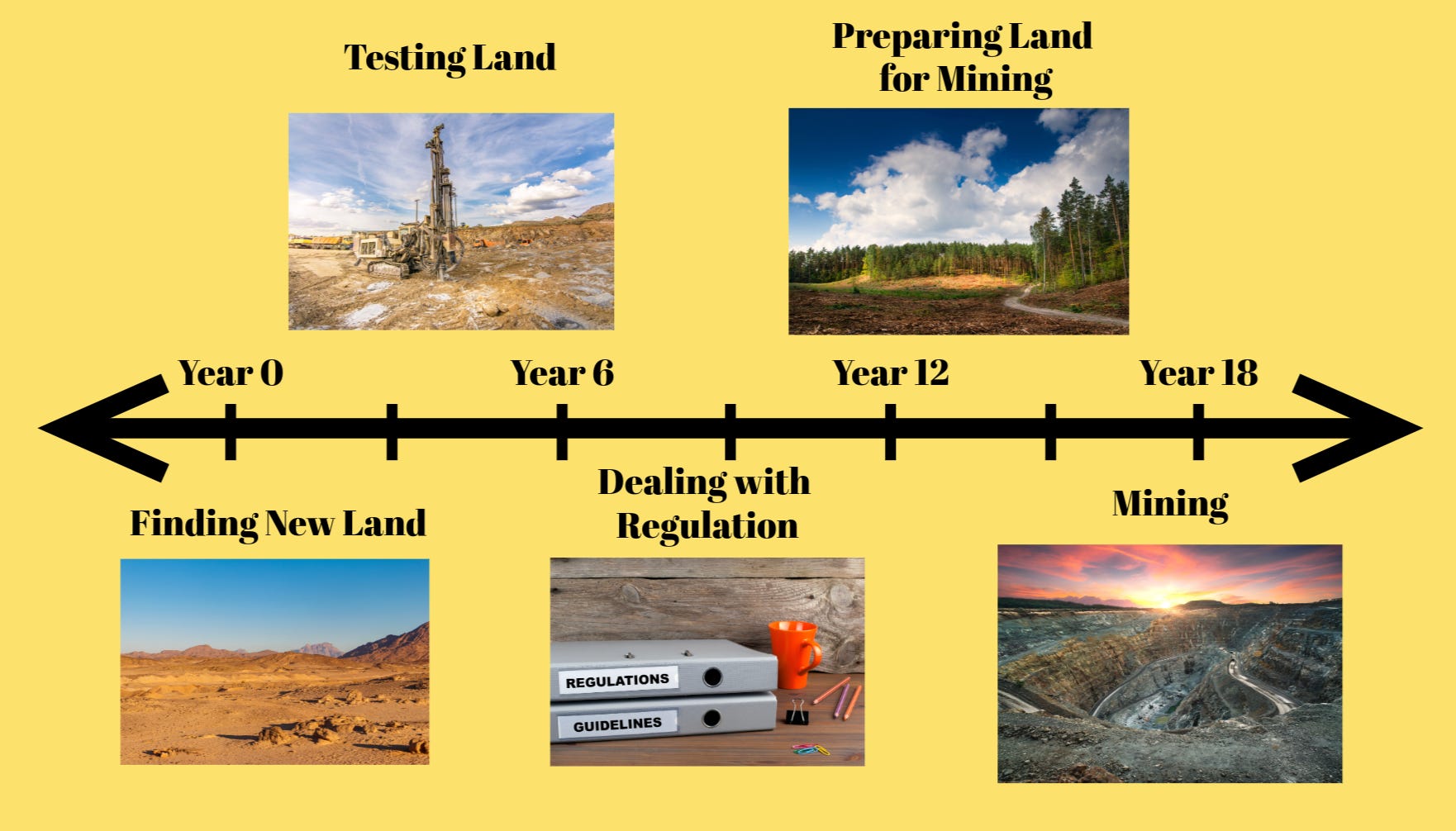
Demand can move quickly; supply cannot. It can take 18 years for a new mine to go from untapped land to full production.
Productivity gains—better technology, better processes—are what allow us to have more stuff at lower prices over time.
When policymakers treat demand as the whole game and ignore supply, they can “stimulate” an economy right into shortages and price spikes, as we saw when COVID checks hit a world where factories and logistics were shut down.
iPhones, VR headsets, and hidden demand
The iPhone is a clean example of supply preceding conscious demand. Before it launched, people could ask for “better phones” or “a nicer BlackBerry,” but not for a touchscreen pocket computer with an app ecosystem, because they’d never seen one. Apple shipped it anyway, then layered the App Store on top, and suddenly “phone” meant something entirely new.
Compare that with virtual reality today. Many people love the idea of full‑immersion VR—the Ready Player One fantasy is powerful—but current hardware can’t deliver the experience at a price most households accept. The demand is conceptual; the actual product is a disappointment. So even at lower prices, headset sales remain niche.
Markets are constantly running that experiment: “Is this thing as valuable in real life as it sounds in people’s heads?” If the answer is yes, you get iPhone‑level adoption. If not, you get expensive curiosities.
Opportunity cost: the economic principle you live by every day
Opportunity cost is one of the simplest and most powerful ideas in economics: every choice is also a non‑choice. If you spend an evening at a concert, you are also choosing not to be at a family reunion or not to rest at home. If you start a lithium mine, you are choosing not to put that money into the stock market.
We do these cost‑benefit analyses constantly:
“If I eat out this week, can I still cover rent?”
“Is the newest iPhone really worth it over last year’s model?”
“Do I take the promotion that pays more but steals my weekends?”
Thomas Sowell summed this up with: “There are no solutions. There are only trade‑offs.” Developing land for housing makes homes more affordable and commutes shorter, but it also means fewer parks, more traffic, and more stress on infrastructure. Economics doesn’t eliminate these tensions; it forces us to look at them honestly.
Why profits exist—and who should get them
Many people feel that business profits are just “taking” from workers or customers. In this chapter, I argue the opposite: profit is the gap between the value consumers freely choose to pay and the cost of turning raw inputs into something useful.
Take the iPhone again. The estimated manufacturing cost of an iPhone 16 Pro Max is far below its retail price, yet people voluntarily pay that premium because they value the device more than the money they give up. Part of that is functionality; part is status, and the appeal of owning a scarce, high‑end object.
So why doesn’t all that profit simply get split evenly among employees? Because the risk profiles aren’t equal. Employees trade their time for relatively steady paychecks and are shielded from company debts if things go wrong. Entrepreneurs, by contrast, can spend 500 million to 1 billion dollars on a mine, wait 20 years for payoff, and still lose everything if permits are revoked or prices collapse. The upside has to compensate for years of risk, stress, and uncertainty.
That said, I argue more firms should use profit‑sharing: when workers share in upside, they have a reason to care about efficiency, innovation, and long‑term health—not just clocking in and out.
Human nature, reputation, and second‑order thinking
Underneath all the charts and equations is human nature. Most of us desperately want to be seen as good and successful, which explains both “keeping up with the Joneses” and the urge to tear down “tall poppies” who get too successful. It’s easier to blame “greedy corporations” than to face how our own choices and incentives shape outcomes.
Reputation becomes a crucial constraint: a company that routinely mistreats customers in a competitive market will eventually suffer as stories spread. But when investor demands dominate, you can get strategies that look good on a quarterly earnings call and terrible to customers—like pricing a mediocre truck against far better alternatives, burning brand equity for short‑term margin, and ultimately getting punished by the market and forced out of leadership.
To really understand how we got to today’s cost‑of‑living crisis, we need to move beyond “first‑order” thinking (“this makes GDP go up”) and look at second‑ and third‑order effects: how repeated decisions about money, interest rates, and inflation compound over decades. That is the territory of The Novack Equilibrium Theory (NETs): unmasking the economic illusions that only show up when you factor in time.
If this resonated, the full Chapter 2, “Back to the Basics of Economics,” is available for free early access. In the next post, I’ll start applying these basics to show how our current system quietly distorts the value of your time, your money, and your future.
Looking for what comes next in the series? Start with 'What Is CPI, and Why Does It Run the Economy?'"
Quick Economics Glossary
Economics
The social science of how people, businesses, and governments decide to use limited resources like time, money, and materials.
Macroeconomics
The “big picture” view of the economy: GDP, inflation, unemployment, growth, and overall cycles like recessions and booms.
Microeconomics
The “up close” view of individual people and firms: how they respond to prices, incentives, income, and constraints.
GDP (Gross Domestic Product)
The total dollar value of all final goods and services produced inside a country over a specific period (usually a year).
Inflation
The general rise in prices over time, which reduces how much a dollar can buy.
Factors of Production
The four basic building blocks of any economy:
Land: Physical space and natural resources (farmland, minerals, water).
Labor: Human time, effort, skills, and knowledge.
Capital: Tools, machines, buildings, equipment (not just money).
Entrepreneurship: People who organize land, labor, and capital, take risks, and create new products or services.
Scarcity
The fact that resources are limited. We can’t have everything we want, so every choice has a cost.
Law of Supply and Demand
Demand: How much of something people are willing and able to buy at different prices.
Supply: How much producers are willing and able to sell at different prices.
As price rises, supply tends to rise and demand tends to fall; as price falls, demand tends to rise and supply tends to fall.
Equilibrium (Market Price)
The price where the amount buyers want to purchase equals the amount sellers want to sell.
Opportunity Cost
What you give up when you choose one option over another—the value of the next best alternative you didn’t choose.
Trade‑off
A practical version of opportunity cost: when gaining one thing means losing or reducing something else (more housing vs. less green space).
Capitalism
An economic system where most resources and businesses are privately owned, and prices and production are guided mainly by markets.
Socialism
An economic system where the state owns or heavily controls major resources and industries, and planning is done centrally.
Fiscal Policy
Government decisions about spending and taxes used to influence the overall economy (for example, stimulus checks, tax cuts, or big infrastructure programs).
Monetary Policy
Actions by a central bank (like the Federal Reserve) to influence interest rates and the money supply to hit goals like stable prices and full employment.
Interest Rate
The price of borrowing money, usually expressed as a percentage per year.
Quantitative Easing (QE)
A central bank strategy where it buys large amounts of financial assets (like bonds) to inject money into the system and push down interest rates.
Profit
The money left over after a business subtracts all its costs from its revenue. It’s the financial reward for successfully creating value.
Break‑even Point
The output or sales level where total revenue equals total costs—no profit, no loss.
Luxury Good
A product whose appeal is partly that it’s expensive and relatively scarce, signaling status (for example, high‑end phones, watches, cars).
Incentives
Rewards or penalties that influence behavior—bonuses, price discounts, taxes, and regulations all act as incentives.
First‑Order Effect
The immediate, obvious impact of a decision or policy (for example, stimulus checks increase spending right away).
Second‑Order / Third‑Order Effects
The indirect and longer‑term consequences that follow later (for example, repeated stimulus plus supply limits contributing to inflation years down the line).
Author: Kyle Novack
March 8, 2026
A Monumental Venture, LLC: research project (Novack Equilibrium Theory – NETs)
Attribution Required: © 2025–2026 Kyle Novack / Monumental Venture, LLC. For educational use with credit; commercial use requires permission. Full details in linked PDFs.